

便秘(专业版)
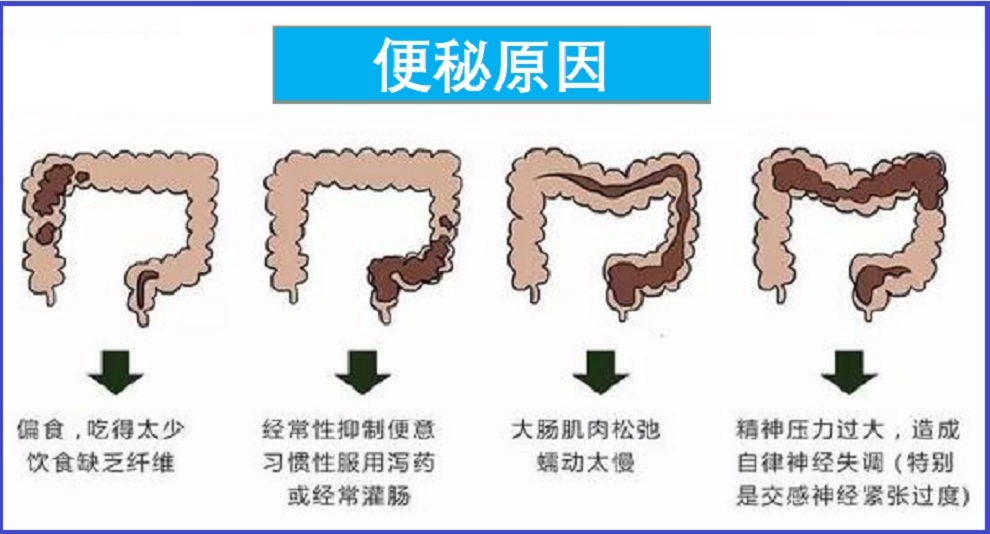
便秘一般是指大便较少,通常每周不到三次,以及排便不舒服,大便往往又硬又干。便秘是一种很常见的胃肠道症状,约10-20%的成年人患有慢性便秘(超过6个月)。
英文名称:Constipation
定义
便秘一般是指大便较少,通常每周不到三次,以及排便不舒服,大便往往又硬又干。便秘是一种很常见的胃肠道症状,约10-20%的成年人患有慢性便秘(超过6个月)。许多患者使用泻药,但可能导致依赖性和副作用。便秘一般可分为2类:
- 原发性便秘,或称功能性便秘,又分为:
- 正常传输型便秘:表现为每天可排便,但却难于排尽,且有腹胀和不适感。这种类型最为常见。
- 慢传输型便秘:表现为食物消化延时,排便少、腹胀和不适等,多见于年轻女性。此外,糖尿病、硬皮病等所致便秘也属于同类型。
- 盆底功能障碍型(或出口梗阻型)便秘:表现为排便费力、不尽感,排便量少,有或无便意等。这在老年患者中较为常见,且常规治疗难于见效。
- 继发性便秘:包括肠神经失调、激素失衡、药物因素,以及堵塞如直肠癌、肠狭窄等。
病因
便秘主因可概括为肠道蠕动受损、肠梗阻,神经和激素状况以及一些药物使用等。具体包括如下:
- 原发性便秘(或功能性便秘)原因主要如下:
- 正常传输型便秘:没有其他病理因素,可能与持续的社会心理压力有关,这在肠易激征IBS最常见。
- 慢传输型便秘:由于肠神经和结肠肌肉蠕动调节受损引起,以及饮食纤维含量低等。
- 盆底功能障碍型(或出口梗阻型)便秘:由直肠和骨盆底部肌肉松缩不协调导致排便障碍。
- 继发性便秘原因包括:
- 神经受损因素:破坏肠神经肌肉信号传导的病症可导致继发性便秘,例如帕金森病、周围神经病变、多发性硬化、脑卒中和脊髓损伤等。
- 内分泌因素:内分泌疾病可导致体液失衡,如甲减、甲亢,妊娠等,可引起或促成便秘;有的是通过对肠神经的最终损害,改变肠肌收缩性和功能,并且破坏肠道微生物群,如糖尿病等。
- 肠梗阻:包括结肠、直肠癌和肠狭窄,压迫结肠的腹部肿瘤和任何引起肠梗阻的原因。
- 骨盆肌肉损伤:有些便秘是由于难以控制骨盆底部和外肛门括约肌的肌肉引起的。
- 药物因素:尤其是阿片类疼痛缓解剂,可引起继发性便秘。其他如:对乙酰氨基酚(泰诺)、抗胆碱能药、抗抑郁药、抗组胺药、抗精神病药、钙通道阻滞剂、β-受体阻滞剂、利尿剂和非甾体抗炎药等。
风险因素
女性便秘是男性的2、3倍。此外,在70岁以上老年群体中很常见。其他可增加便秘的风险因素包括:
- 久坐不动的生活方式
- 长期卧床,因手术或事故
- 饮食中的低纤维,或高脂肪和糖
- 饮水不足,或脱水
- 常常拖延大便时间
- 旅行:由于改变习惯,紧张压力和不良的饮食等
症状
常见症状包括:- 每周排便少于3次
- 要用力排便
- 感觉好像直肠堵塞、阻止肠蠕动
- 感觉腹痛、腹胀
- 直肠疼痛和压力
- 大便困难
- 硬、干燥和粗的大便
- 大便后感觉未排空
- 便秘时间超过2~3周
- 腹部疼痛和腹胀
- 恶心或呕吐
- 有感染的迹象,如发烧或发冷
- 肛门疼痛或燃烧感
- 大便带血或颜色发黑
- 认为处方药物引起便秘
- 体重下降
并发症
慢性便秘的并发症包括:- 肛门肿胀或痔疮:过度排便会导致肛门周围静脉肿胀。
- 肛门皮肤撕裂或肛裂:大便或硬便可引起肛门撕裂。
- 不能排出的粪便(粪便嵌塞):慢性便秘可能会导致顽固的粪便堆积在肠内。
- 直肠脱垂:过度排便会导致少量直肠伸展并从肛门突出。
疗法
综合选项可包括如下调整饮食与生活方式
- 健康饮食、富含纤维如新鲜水果、蔬菜和全麦谷物等
- 李子果、猕猴桃、橄榄油和亚麻籽等可以促进排便
- 限制食用精加工和油腻食物
- 每天多喝水
- 经常运动锻炼
营养与草本综合干预
以下是基于循证医学和循证营养学有关文献综合的结果。
有助于防控便秘的营养和草本补充剂,主要包括如下:
- 益生菌:肠道微生物组越来越被认为是整个消化道功能或功能紊乱的关键因素。益生菌是含有活微生物的补充剂,用于改善健康。益生菌可有效治疗多种消化系统疾病,包括慢性便秘和肠道易激征-便秘型(IBS-C)1。
- 镁:镁是一种古老的治疗便秘的矿物质。作为一种渗透性泻药,镁可以将水吸入肠道,以促进排便10。在成人和儿童中,随机对照试验表明,补充镁对改善慢性便秘安全有效。
- 膳食纤维:包括可溶性和不溶性纤维。可溶性纤维吸收水分并将其保持在肠道中,促进粪便柔软易动,并在暴露于水中时形成润滑膜;不溶性纤维通过刺激肠道蠕动向粪便中添加膨胀颗粒并缩短运输时间17,18。可溶性纤维通常是可发酵的,因此可以被肠道中的微生物消化,故也被称为“益生元”。益生元可发酵纤维对于在肠道中建立和维持有益细菌的健康菌落很重要19。可溶性纤维存在于车前籽壳、豆类、坚果、种子以及一些水果和蔬菜中。不溶性纤维的来源包括麦麸、全谷物和蔬菜等。
- 鼠李皮:与番泻叶一样,鼠李树皮是传统便秘治疗中常用的刺激性泻药34。它含有蒽醌,通过刺激肠道蠕动或作用于肠道神经肌肉来缓解便秘35。鼠李皮等刺激性泻药可能会导致腹泻和电解质损失,因此通常建议仅短期使用36。
更多可点击其个性化的综合干预方案如下:
- 女性便秘管理:
更多相关内容可参阅本文如下专文:
医疗干预
常规治疗药物包括如下:
- 聚乙二醇3350
- 洋车前籽
- 多库酯钠
- 乳果糖
- 肉毒杆菌注射
自我护理
- 培养大便习惯:安排每天在相同的时间大便,最好是早晨做的第一件事,坐在马桶上15-20分钟。随着时间的推移,身体会习惯每天在同一时间正常排便。
- 管控妥有关慢性疾病。
- 改变治疗药物:如果服用的药物可引起便秘,咨询医生是否有可替代的其他药物。
预防
可以防止或减少便秘发生,措施可包括:- 吃健康、均衡和富含纤维的饮食
- 经常锻炼
- 每天喝足饮水
- 形成定时大便的习惯
- 大便时放松,不要过急、紧张
- 如果觉得要大便,不要拖延,应尽快上厕所
参考文献:
1. Sharifi-Rad J et al. Probiotics: Versatile Bioactive Components in Promoting Human Health. Medicina (Kaunas). 2020 Aug 27;56(9):433.
2. Ohkusa T et al. Gut Microbiota and Chronic Constipation: A Review and Update. Front Med (Lausanne). 2019 Feb 12;6:19.
3. Dimidi E et al. Probiotics and constipation: mechanisms of action, evidence for effectiveness and utilisation by patients and healthcare professionals. Proc Nutr Soc. 2020 Feb;79(1):147-157.
4. Zhang C et al. Meta-analysis of randomized controlled trials of the effects of probiotics on functional constipation in adults. Clin Nutr. 2020;39(10):2960-2969.
5. Tanaka Y et al. Short- and long-term dynamics in the intestinal microbiota following ingestion of Bifidobacterium animalis subsp. lactis GCL2505. Biosci Microbiota Food Health. 2015;34(4):77-85.
6. Airaksinen K et al. The effect of a probiotic blend on gastrointestinal symptoms in constipated patients: a double blind, randomised, placebo controlled 2-week trial. Benef Microbes. 2019 Jul 10;10(6):617-627.
7. Magro DO et al. Effect of yogurt containing polydextrose, Lactobacillus acidophilus NCFM and Bifidobacterium lactis HN019: a randomized, double-blind, controlled study in chronic constipation. Nutr J. 2014 Jul 24;13:75.
8. Ibarra A et al. Effects of 28-day Bifidobacterium animalis subsp. lactis HN019 supplementation on colonic transit time and gastrointestinal symptoms in adults with functional constipation: A double-blind, randomized, placebo-controlled, and dose-ranging trial. Gut Microbes. 2018;9(3):236-251.
9. Dimidi E et al. Probiotic use is common in constipation, but only a minority of general and specialist doctors recommend them and consider there to be an evidence base. Nutrition. 2019 May;61:157-163.
10. Mori H et al. Magnesium Oxide in Constipation. Nutrients. 2021 Jan 28;13(2):421.
11. Mori S et al. A Randomized Double-blind Placebo-controlled Trial on the Effect of Magnesium Oxide in Patients With Chronic Constipation. J Neurogastroenterol Motil. 2019 Oct 30;25(4):563-575.
12. Morishita D et al. Senna Versus Magnesium Oxide for the Treatment of Chronic Constipation: A Randomized, Placebo-Controlled Trial. Am J Gastroenterol. 2021 Jan 1;116(1):152-161.
13. Kubota M et al. Lactobacillus reuteri DSM 17938 and Magnesium Oxide in Children with Functional Chronic Constipation: A Double-Blind and Randomized Clinical Trial. Nutrients. 2020 Jan 15;12(1):225.
14. Mori H et al. Clinical features of hypermagnesemia in patients with functional constipation taking daily magnesium oxide. J Clin Biochem Nutr. 2019;65(1):76-81.
15. Blaine J et al. Correction. Renal control of calcium, phosphate, and magnesium homeostasis. Clin J Am Soc Nephrol. 2015 Oct 7;10(10):1886-7.
16. Tatsuki M et al. Serum magnesium concentration in children with functional constipation treated with magnesium oxide. World journal of gastroenterology : WJG. Feb 14 2011;17(6):779-783.
17. Yang J et al. Effect of dietary fiber on constipation: a meta analysis. World journal of gastroenterology : WJG. Dec 28 2012;18(48):7378-7383.
18. Eswaran S et al. Fiber and functional gastrointestinal disorders. Am J Gastroenterol. May 2013;108(5):718-727.
19. Quigley EMM. Prebiotics and probiotics; modifying and mining the microbiota. Pharmacological Research. 2010;61(3):213-218.
20. McRorie JW et al. Psyllium is superior to docusate sodium for treatment of chronic constipation. Aliment Pharmacol Ther. 1998 May;12(5):491-7.
21. Ashraf W et al. Constipation in Parkinson's disease: objective assessment and response to psyllium. Mov Disord. 1997 Nov;12(6):946-51.
22. Ashraf W et al. Effects of psyllium therapy on stool characteristics, colon transit and anorectal function in chronic idiopathic constipation. Aliment Pharmacol Ther. 1995 Dec;9(6):639-47.
23. Eswaran S et al. Fiber and functional gastrointestinal disorders. Am J Gastroenterol. 2013 May;108(5):718-27.
24. Nishimura M et al. Effects of the extract from roasted chicory (Cichorium intybus L.) root containing inulin-type fructans on blood glucose, lipid metabolism, and fecal properties. J Tradit Complement Med. 2015 Jan 20;5(3):161-7.
25. Kolida S et al. Prebiotic effects of inulin and oligofructose. Br J Nutr. 2002 May;87 Suppl 2:S193-7.
26. Yurrita LC et al. Effectiveness of inulin intake on indicators of chronic constipation; a meta-analysis of controlled randomized clinical trials. Nutr Hosp. 2014 Aug 1;30(2):244-52.
27. Tester RF et al. Mannans and health, with a special focus on glucomannans. Food Research International. 2013;50(1):384-391.
28. Marzio L et al. Mouth-to-cecum transit time in patients affected by chronic constipation: effect of glucomannan. Am J Gastroenterol. 1989 Aug;84(8):888-91.
29. Kajla P et al. Flaxseed-a potential functional food source. J Food Sci Technol. 2015 Apr;52(4):1857-71.
30. Hanif Palla A et al. Dual effectiveness of Flaxseed in constipation and diarrhea: Possible mechanism. J Ethnopharmacol. 2015 Jul 1;169:60-8.
31. Slavin JL et al. Partially hydrolyzed guar gum: clinical nutrition uses. Nutrition. 2003 Jun;19(6):549-52.
32. Polymeros D et al. Partially hydrolyzed guar gum accelerates colonic transit time and improves symptoms in adults with chronic constipation. Dig Dis Sci. 2014 Sep;59(9):2207-14.
33. Russo L et al. Partially hydrolyzed guar gum in the treatment of irritable bowel syndrome with constipation: effects of gender, age, and body mass index. Saudi J Gastroenterol. 2015 Mar-Apr;21(2):104-10.
34. Rogers J. Management of constipation in the community. Journal of Community Nursing. 2013;27(2):20–24.
35. Sigma-Aldrich. Cascara sagrada. http://www.sigmaaldrich.com/life-science/nutrition-research/learning-center/plant-profiler/rhamnus-purshiana.html.
36. UMMC. Health Information: Medical Reference Guide: Constipation. Available at http://umm.edu/health/medical/altmed/condition/constipation. Last updated 05/07/2013a.
参考来源:
美国梅奥诊所
www.mayoclinic.org
美国胃肠病协会
http://www.gastro.org
美国国立糖尿病、消化和肾病研究所
http://www.niddk.nih.gov
加拿大胃肠病协会
https://www.cag-acg.org
加拿大卫生部
http://www.hc-sc.gc.ca
免责声明和安全信息
- 本信息(包括任何附带资料)不是为了取代医生或有关合格从业人士的建议或忠告。
- 任何人如果想要对本文涉及的药物、饮食、运动或其他生活方式的使用、或改变调整,以预防或治疗某一特定健康状况或疾病,应首先咨询医生或有关合格从业人士,并获得他/她们的许可。妊娠和哺乳妇女在使用本网站任何内容前,尤其应征求医生的意见。
- 除非另有说明,本网站所述内容仅适用于成人。
- 本网站所推荐的任何产品,消费者应该以实际的产品标签内容为准,尤其应关注重要的安全信息以及产品最新信息,包括剂量、使用方法和禁忌症等。
- 由于循证医学研究、文献及有关产品处于不断的变化中,本网站工作人员将尽力更新。
- 本网站不能保证所载文章内容、综合干预方案以及相关成分或产品述及的健康益处,也不承担任何责任。